
Drive Hubler Certified Pre-Owned

Blog / Used Sports Car Dealer

Blog

All Used Sports Car Dealer Financing Used car dealer near Indianapolis used car dealership in Greenwood Used SUVs for Sale Certified Pre-Owned Cars Electric Cars for Sale Hybrid Cars for Sale Sell my car Used Car Dealer Near Bargersville Used Car Dealer Near Columbus, IN Used car dealer near Fishers Used Car Dealer Near Franklin, IN Used car dealer near Plainfield Used car dealer near Shelbyville Used car dealership Used Cars for Sale Used Cars for Sale Near Columbus Used Cars for Sale Near Martinsville Used Chevy dealer Used Dodge dealer Used Ford dealer used Jeep dealer Used SUVs for Sale Near Mooresville Used Trucks for Sale
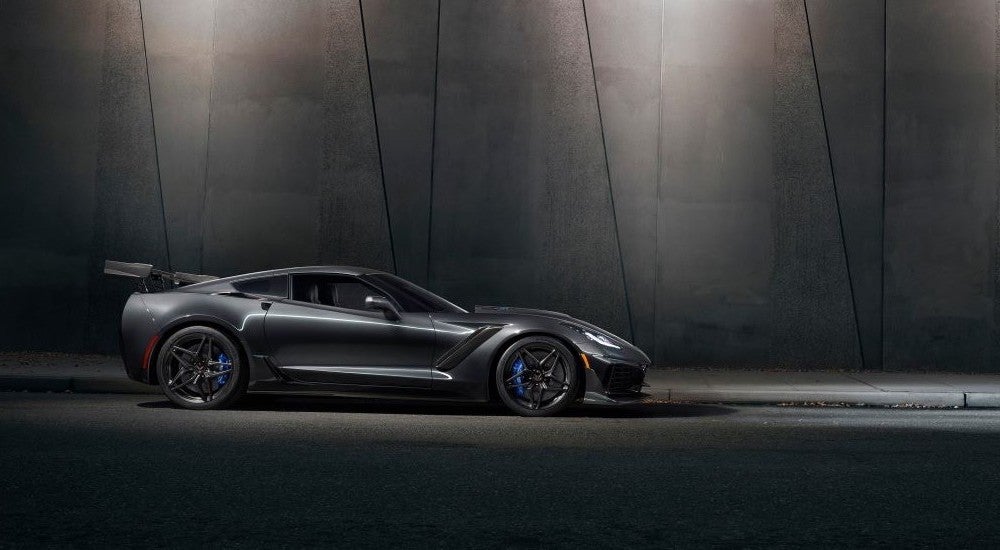
A grey 2019 Chevy Corvette ZR1 parked in front of a concrete wall at night.

High-Speed Showdown: Sports Versus Muscle Cars

There are plenty of options for drivers in the market for a high-performance ride that will inject a little excitement into their daily drive. From pure sports cars and muscle cars to pony cars, supercars, and hypercars, it can get to the point where the differences between different categories can start to become as blurry as the cars themselves. To the uninitiated, any fast, low-slung coupe probably reads as a sports car, but when you start to drill down into the differences between various classifications, that impression quickly evaporates. These segments vary widely in terms of price and performance, from relatively affordable pony cars like the Chevy Camaro 1 LS and Ford Mustang EcoBoost, which both ring in at less than $30,000, to one-of-a-kind feats of hypercar engineering like the Bugatti Chiron Super Sport 300+ which will set you back some $3.9 million. Granted, most drivers aren’t going to have that sort of cash to part with when shopping for their next ride, so instead of tempting ourselves with some of Europe’s most unhinged automotive creations, let’s contrast two categories that are more likely to rear their head when shopping at your local used sports car dealer: sports cars and muscle cars. On the surface, the difference between these two models is pretty straightforward: while both models are designed to be fast, muscle cars excel in straight-line speed, while sports cars are designed for carving through corners, hugging the turns, and prioritizing acceleration over top speed. Of course, that hardly scratches the surface between sports and muscle cars, so let’s dive in and learn more about each segment, trace their history, and check in on some other popular high-speed categories. Sports Cars While sports cars truly came into their own in the post-WW2 era, the segment can trace its history all the way back to some of the first touring and roadster models. As long as there’s been internal combustion, there have been those eager to create the fastest car possible, which is where the humble sports car gets its start. The 1903 Mercedes Simplex 60 hp might be the first model that could be considered a sports car, though, at the time, it was classed as a fast touring car. Designed with never-before-seen features like a gated four-speed transmission, pressed-steel chassis, honeycomb radiator, long wheelbase, and low center of gravity, the Mercedes Simplex 60 hp produced—you guessed it—60 hp. That might not sound like a lot by today’s standard, but at the time, it was enough to make the Simplex 60 hp the fastest production car on the market. In many ways, the Simplex 60 hp would set the stage for all sports cars to come, especially when it comes to the ingenious combination of a long wheelbase and low center of gravity. The sports car segment would truly find its footing after WW2 when a number of automakers started turning out small, speedy models designed to conquer the tight, twisty roads of Europe and Great Britain. The MG TC is widely considered the class of this era, accentuating a minimalist formula that would inform the next generation of sports cars with its front-engine/rear-drive, two-seat design. Americans serving in the European theater would develop an affinity for these rapid roadsters, leading to a post-war boom in the U.S. market. The Chevrolet Corvette might not have been America’s first sports car—that honor would probably go to the 1951 Nash-Healey—but it would become “America’s sports car” in short order. It’s an appropriate designation for the icon model, especially when you consider the country’s long-standing bigger-is-better ethos. Some purists would class the Corvette as an outlier in the sports car segment due to its rapidly growing engine. While small-displacement motors were the go-to for most sports cars, Chevy offered the Corvette with a big-block V8 that challenged the formula. That brings us to today’s sports cars, which are generally defined by a rigid list of features. First and foremost, a sports car has to have excellent acceleration. This is a vital feature when tackling the sort of curvy, narrow roads sports cars were designed for where the ability to accelerate out of a turn—not at top speed or with pure power—is the recipe for success. Second, they must be small and compact, with a low center of gravity that enables tight, responsive handling. Interior space tends to be an afterthought in the segment where two-seat models with limited cargo space rule the roost. Sports cars are also designed to look fast, with sleek, flowing lines and aggressively curvy bodies, and are generally less expensive than muscle cars due to their smaller size and engines. This smaller size means that sports cars are generally more efficient than their muscle car compatriots, though “efficient” is all relative in a segment where the average combined MPG hovers below 20. Muscle Cars America might have been infatuated with sports cars when they first hit US shores, but it was only a matter of time before the country put its stamp on the concept. That moment would come in 1963 when the Pontiac Tempest GTO first hit the streets. The recipe was simple: modify a typical midsize model to accept a large, 383-cubic-inch V8 from one of Pontiac’s full-size offerings, and viola: the modern muscle car was born. This feat of automotive art was conceived by Pontiac chief engineer John Z. DeLorean, whose name should be instantly recognizable to any “Back to the Future” fans. With its unbridled power and blistering top speed, the GT would inspire a decade of muscle car development with popular models like the Chevrolet Chevelle SS, Buick Gran Sport, Plymouth GTX, Dodge Super Bee, and Charger. Muscle cars allowed for the sort of automotive antics that are the beloved pastime of young drivers everywhere, especially when it came to drag racing. The segment’s low average starting price didn’t hurt either—with models retailing for less than $2,500 ($18,800 in today’s money), muscle cars were well within reach for drivers of every generation. The Charger would soon become the face of the segment thanks to its starring role on the hit TV series “The Dukes of Hazzard” as the unmistakably orange General Lee. So, what defines the muscle car segment? Size plays a major role. Muscle cars are almost always going to be larger than their sports car forerunners, especially when it comes to what’s underneath the hood. Muscle cars are usually designed with a hefty V8 engine that gives the model all the power it needs to produce some blistering straight-line speed. To accommodate these bulky engines, muscle cars tend to be much larger than sports cars. While that might be a disadvantage when it comes to handling and the all-important power-to-weight ratio, it does make muscle cars more practical than traditional sports cars. Unlike many sports cars, which are typically designed in a two-door/two-seat configuration, muscle cars are comparably roomy with plenty of headroom, legroom, and cargo space. Some muscle cars, like the 2023 Dodge Charger, even have a four-door design that makes them an attractive prospect for those seeking a daily driver that’ll turn some heads during the morning commute. Speed is really the most important attribute of any muscle car, especially when moving in a straight line. This emphasis on top speed means that muscle cars don’t always have the best handling, but they more than make up for it when you put the pedal to the metal. As one would imagine, their relative bulk and power mean that muscle cars aren’t the most fuel-efficient models on the road, but they do offer some advantages over the sports car segment. Firstly, they’re generally a safer all-around ride because they don’t sit so close to the ground or weigh as little as many sports cars. The muscle car is also a uniquely American invention. While plenty of international brands produce sports cars, the muscle car segment has primarily been limited to models from Dodge, Ford, and Chevy. Today, the segment is dominated by a single model in the Dodge Challenger, as all other automakers have fazed out their muscle car offerings. You might be asking, "But what about the Ford Mustang, Chevrolet Camaro, and Dodge Challenger?" While these models might share a number of attributes with muscle cars, they really belong in their own category, which we’ll discuss next. Pony Car Sometimes, tracking down a segment’s origin can be difficult. Other times, it’s as simple as looking at the name on the tin. All pony cars were born from—and named after—a single model that first debuted in 1964: the Ford Mustang. The Mustang not only created an entirely new category, it lent the emerging segment its equine-inspired name. That said, there’s long been confusion about exactly what constitutes a pony car and how it differs from the muscle car segment. Size is the most significant factor in differentiating between the two classes, with pony cars typically being built as compact models instead of the midsize muscle car. If you want to put an exact figure on this size difference, experts tend to call any model with a wheelbase greater than 110 inches as a muscle car, while anything below falls firmly into the pony category. These numbers have risen over time, but the Mustang still sticks to the category’s truest definition with a current wheelbase of 107.1 inches. The modern Chevy Camaro and Dodge Challenger are the Mustang’s closest competitors in the segment, but they’ve ballooned up to 110.7 and 116.2 inches over the decades. Like muscle cars, pony cars are designed more for top speed and power than acceleration and handling. This has led most automakers to outfit their pony cars with V6 engines or even turbo-assisted four-cylinder setups as opposed to the larger V8s found in many muscle cars. The line between muscle and pony car has definitely blurred over the decades, and some would say the term “pony car” itself has already become a bit of an anachronism, but just trying telling that to the Mustang, which has been the world’s best-selling sports car for the last 10 years. Supercar While we’re breaking down the spectrum of sporty categories, we might as well mention supercars. The segment got its start with the unveiling of the Lamborghini Miura at the 1966 Frankfurt Motor Show. The mid-engine, rear-wheel-drive V12 sports car blew plenty of minds upon its debut, setting records for both top speed and acceleration. The Miura combined the best aspects of the sports and muscle car categories: it was low-slung, sleek, and cornered like a dream but also offered the sort of off-the-line performance that would earn it a podium at any muscle car event. Lamborghini would soon see competition from the likes of Ferrari and McLaren—and more recently Pagani and Koenigsegg—along with some American-made offerings like the Ford GT and (by some definitions) the Chevy Corvette. Aside from its massive engine and 500-plus horsepower, the most defining aspect of a supercar is its price, with models retailing for at least $250,000. Hypercar What’s more super than a supercar? A hypercar, of course. Loosely defined as any model that costs more than $1 million and exceeds 1,000 horsepower, hypercar sightings are exceedingly rare. While the typical driver might spot a Lamborghini, Ferrari, or McLaren while cruising around town, hypercars can rarely be found outside test tracks, billionaire’s driveways, and certain Middle Eastern emirates. The Bugatti Veyron is the poster child for the hypercar segment, boasting a 16-cylinder engine that, thanks to its four turbochargers, can achieve 253 mph without breaking a sweat. The hypercar famously beat a small Cessna plane on an episode of “Top Gear,” a feat that drives home just how speedy the hypercar segment can be. The Veyron’s next-of-kin is even more thrilling with a 304 mph top speed and 1,500-horsepower engine, but it will also set you back a cool $3 million. Like supercars, hypercars are built for performance, not comfort, and can be a challenging ride for all but the most experienced drivers. Whether you settle on a sports car, muscle car, or pony car, one thing is certain: your days of being bored behind the wheel are over. For those in the market for pure performance, practicality be damned, sports cars are probably the way to go. With their tight handling, rapid acceleration, and eye-catching style, sports cars are unlike any other segment on the market. Larger, roomier muscle cars might be worth a closer look if you're seeking a slightly more practical ride. What they lack in handling, they more than make up for in power, striking a balance that’s sure to please any aspiring gearhead. That said, it can be hard to take advantage of these vehicles' considerable power in everyday driving. No matter how much cash you drop on a sports or muscle car, you’ll still be subjected to the same speed limits as that antique Corolla in the next lane. If you want to truly test your mettle, open track days or local racing series might be a good place to start. A closed course will allow you to really see what your sports or muscle car is capable of, unlocking its true potential and giving you a tantalizing taste of life in the fast lane. MSRP may change without notice. See dealer for complete details.
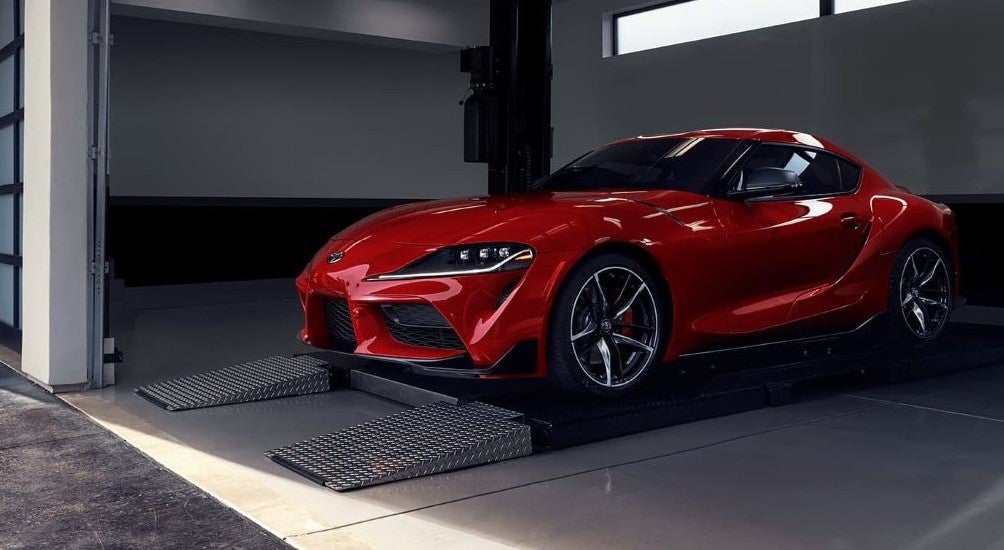
A red 2020 Toyota GR Supra parked in the garage of a used sports car dealer.

Can A Sports Car Be Your Daily Driver? Here's Our Take:

What do you envision when you think of a used sports car? You might imagine a potently powerful machine with a sleek physique built for adrenaline-pumping weekend joyrides in the sun. But what if I told you that a sports car can also be a great daily driver? Here at DriveHubler Certified Pre-Owned, we’re proud to be your trusted used sports car dealer. We know that many enthusiasts grapple with the decision of whether to buy a sports car for daily driving. Let’s go over the pros and cons of owning a sports car as a daily driver so that you can make an informed decision. The Allure Of Sports Cars The biggest appeal of sports cars is that they are thrilling to drive. There is no doubt that these cars are designed to deliver an exhilarating driving experience with their superb power, spirited handling, and special ability to make the driver feel connected with the road. It's a little thrilling to hear the rumbling pitch of a high-performance engine and feel the sudden, enthralling thrust of acceleration from a vehicle crafted for excitement. Of course, sports cars look great. They offer eye-catching designs that turn heads no matter where they go. With their cutting lines, aerodynamic bodies, and aggressive styling cues, sports cars know how to make a bold statement on the road. If you crave the type of attention that a vehicle like this brings with it, a sports car is a phenomenal option. Handling and performance are high points for sports cars—it’s what they are engineered for, after all. They take sharp corners with no problem, and you can accelerate quickly in them, making open highways and winding roads fun. If you’re looking for a lot of precision and agility, a sports car will give them to you. Daily Driving Needs A sports car can be a daily driver, but it will have to check some pretty big boxes—the biggest being comfort and convenience. Comfort is critical to daily driving. Since you will likely spend a lot of time inside your car, you will want a smooth ride quality, supportively structured seats, and an infotainment system that is easy to use and can make your daily commute smooth and pleasant. This can be at odds with a sports car's basic construction. Cargo space is another factor. You need a car that can handle your everyday needs, from toting around your golf clubs to bringing groceries home. Sports cars aren’t exactly known for abundant cargo or cabin space, which can hamper daily driving. Fuel efficiency is a third concern that buyers consider when looking for a daily driver. You might incur a lot of stop-and-go traffic during the daily commute, and the big, powerful engines in sports cars tend to not be the most fuel-efficient option for these scenarios. This is why it is important to consider your driving distance each day and the cost of fuel when considering whether a sports car is a good fit for you. The Advantages Of Daily Driving A Sports Car Sports cars can do many things very well, and they certainly make commutes more enjoyable. They have responsive handling and high-octane acceleration that can make each ride feel like an adventure. Even a long drive to work can feel delightful in a great used sports car. You can enjoy a high-quality ride that provides a lot of joy. Contemporary sports cars typically come equipped with sport-tuned suspension systems that give them comfortable and controlled ride qualities, even on rough road surfaces. They don't jar you out of your seats with every single bump anymore. There are a lot of safety features on relatively new sports cars since safety is a priority for all automakers. Blind-spot monitoring, adaptive cruise control, and emergency braking systems are just some of the driver-assist features that you can find in a sports car that is even just a few years old. These features help make life on the road safer and less stressful, assisting you in navigating traffic and reducing the risk of getting into a collision. There’s also an emotional element to owning a sports car. Not only does it give you a sense of status, but it can boost your confidence and make you feel like you’ve accomplished something significant. You show up to work with a glint in your eye and standing taller. A sports car is a reward for your hard work and dedication. The Cons Of Daily Driving A Sports Car Of course, there are some downsides to driving a sports car as your everyday commuter. First and foremost, sports cars don’t have much cargo space for your everyday items. If you need to haul big loads on a regular basis, a sports car will likely feel impractical. Fuel costs associated with sports cars can be a bit distressing since their high-performance engines often require more and higher octane fuel than most suburban commuter vehicles. Going to work day after day in a sports car can add up quickly, especially when gas prices are high. This should definitely factor into your purchasing decision. While many contemporary sports cars have made major strides in terms of comfort, there is still a chance that you’ll find one that falls short on comfort compared to SUVs and sedans. They generally have firmer suspensions, lower ride heights, and restrictive cabin space, making them less than accommodating for lengthy daily drives. Finally, you will need to bear in mind that sports cars are often powered by rear-wheel drive and don’t have much ground clearance. This makes them less able to deal with heavy snow or rain. Bad weather can make them slide off the road, so if you face this in your neck of the woods, a sports car might not be a great daily driver for you. Making The Decision How are you supposed to make a decision about buying a sports car as a daily driver? Start by assessing your needs. How long is your daily commute? What type of cargo will you need to transport? How are the roads you travel on? If your everyday commute matches up with the strengths of a sports car, then it could be a good fit. Of course, you must be realistic about how much money you can spend. Account for the purchase costs, but don’t forget the long-term ones as well. Maintenance, insurance, and fuel costs need to be factored in when considering whether you can afford to drive a sports car every day. You might wish to take the two-car approach, as many sports car fans do. They drive their practical vehicle during the week, but when the weekend hits, they break out the sports car and enjoy the best of both worlds. If you have children, you might need to trade cars with a partner, depending on school drop-offs, soccer practice, or tuba lessons. Whatever you do, make sure you take an extended test drive in the used sports car that appeals to you before you decide to buy it. This lets you evaluate its real-world performance, practicality, and comfort. Of course, it might also tempt your adventurous side and affect your decision in another direction. You might wish to buy a Certified Pre-Owned (CPO) model—it can be a wise choice. CPO cars offer warranty coverage for peace of mind, plus they have been inspected and—as needed—refurbished to meet the high standards set by their manufacturers. You can get a vehicle that is only a few years old with low mileage for a reasonable price when you decide to go CPO. Some Final Food For Thought The idea of driving a sports car as an everyday commuter isn’t as much of a pipe dream as it seems. Sure, there are some practical aspects to take into consideration, but the pros of driving an eye-catching sports car you love can outweigh more practical considerations for some people. Ultimately, your decision on whether to buy a used sports car for a daily driver will depend on your personal preferences, unique needs, and your budget. DriveHubler Certified Pre-Owned is your trusted dealer for used sports cars, and we offer a wide variety of high-quality CPO models that balance your desire for performance with reliability. Whether you are seeking a sleek and riveting commuter vehicle or a weekend fun-mobile, there’s a used sports car waiting here for you. Your daily commute can be just as enthralling as your weekend adventures with the right sports car. You just need to find the one that strikes the right balance between your needs and wants.

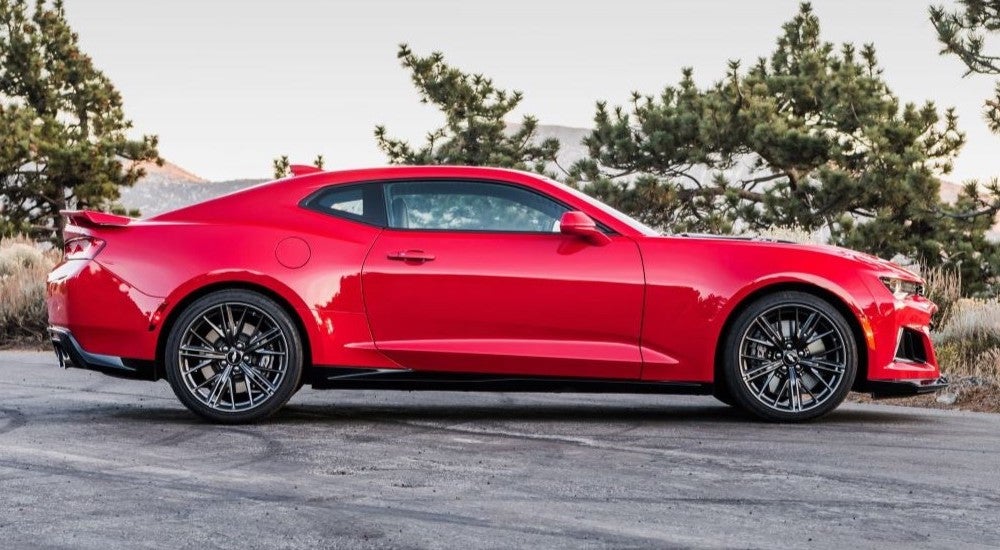
Side view of a red 2017 Chevy Camaro ZL1 parked on a mountain overlook.

Sports Cars Still in Production and For Sale

With vehicles like the subcompact SUV gaining in notoriety and popularity, the sports car can sometimes be thought of as a relic of the past. While the vehicle dominated the industry in the 1970s and 80s, today’s drivers are more likely to look for practicality in their vehicles than style and performance. That said, there are still plenty of drivers who yearn for the days when high-octane engines and two doors were all you needed in a car. Here at DriveHubler Certified Pre-Owned, we’re all too eager to sell these sports cars and work with the drivers who love them so deeply. If you’re in the market for a vehicle that brandishes excitement and are looking for an outstanding used sports car dealer, we can work with you to find something to get your heart racing. Chevrolet An American institution for well over a century, Chevy has a proud pedigree when it comes to the sports car. From the earliest days of the Corvette to the incarnations that dominate the blacktop today, few brands have paid as much attention to this vehicle class as they have. For a particular type of driver, the name Chevy is synonymous with a pair of classic American performance cars: Chevy Camaro Arriving in the late 1960s as Chevy’s answer to the Ford Mustang, the Camaro has spanned six generations and continues to thrive on eight cylinders and offer performance to those who seek it. Available as a coupe, convertible, or the almost frighteningly high-powered Camaro Z71, there are few vehicles that have gained the type of pedigree that the Camaro has. Its aerodynamic design and powerful engine contribute to its legendary speed and performance. Chevy Corvette One of the oldest American sportsters still in production, the Chevy Corvette has been one of the signature models for Chevy for several decades. Like the Camaro, the vehicle comes in a coupe or convertible design, and there is a high-performance version. The Corvette Z06 belts over 600 hp and rivals similar offerings from Lamborghini and BMW. Its reputation for power and cornering ability is well deserved. Ford Mustang It’s impossible to mention Chevy and not give equal attention to their long-standing rival, Ford. In recent years, Ford has repurposed their efforts to manufacture more SUVs than cars, but there’s one sports car that still stands proudly in its lineup. The Ford Mustang, which started the pony car class of vehicles and the age of muscle, still remains in production today. In an effort to cater to a wide variety of drivers, the original pony can be outfitted with an economical four-cylinder or a V8 for those who always wanted to live out their race car fantasies. Mazda Miata The sports car isn’t a vehicle limited to domestic manufacturers. Some of the most economical and performance-oriented offerings come to us by way of Japan. The Mazda Miata is easily one of the most well-known. Known as the “roadster” among its fanbase, the Miata makes use of rear-wheel drive (RWD) and a four-cylinder engine to offer performance that turns heads. Still in production today, it remains a symbol of on-road domination. Subaru BRZ If you were to ask the average person about Subaru, they would likely be quick to name the Outback and Forester off the top of their head. They also might mention the fact that Subaru vehicles are known for having all-wheel drive. You could be forgiven for thinking that all Subarus are practical family cars. That might be the case for most of them, but not all. The Subaru BRZ is a sports car through and through. Equipped with RWD and an engine that produces over 200 hp, the BRZ has a reputation for having punchy acceleration and a stylish design that comes from a love of the racecar aesthetic. Recent tests showed that the BRZ can accelerate from 0-60 mph in just 5.4 seconds, making it a worthy contender in its class. Nissan Z There’s a very good chance you have a parent who once drove one of these machines back in the 1980s. When Nissan was still known as Datsun, this was one of their most popular products, and now, a new generation gets to experience it first-hand. A six-speed manual transmission will appeal to those who are performance hounds as well as nostalgia buffs, and an available horsepower of 400 makes the Z not only ready for primetime but ready to hit the race track and break a few records while doing so. Toyota GR Supra Having covered the Miata and Z, it’s only fitting that we complete the trifecta of Japanese sports cars that were prominent in the 1980s. The Toyota GR Supra is a worthy successor of its predecessors and continues the tradition of winning big at the racetrack. The modern incarnation of the vehicle comes with one of two turbocharged engines, which deliver horsepower from 255 to 382. Priced much lower than many of its competitors from Europe, Toyota’s ability to offer top-tier performance while underbidding the competition is a testament to its staying power as one of the most respected brands in the entire industry. Dodge Challenger The golden age of the muscle car is most notable for the emergence of the Camaro and Mustang as the prime contenders for the crown of high performance. The third car in the high-octane trifecta was the Dodge Challenger. The Mustang and Camaro had periods where they were more or less domesticated and made more palatable for drivers who liked the style of the vehicles in question but not their copious amounts of horsepower. When the Challenger made its return after being absent for several years, there was virtually nothing that had changed since the vehicle’s heyday. While the base six-cylinder engine was potent with over 300 hp, drivers who had been waiting to experience the power of Dodge's fabled HEMI engine could now actually drive it. With 303 and 807 hp available in two different trims, it’s clear that Dodge can still craft a sports car made for high performance. Of course, there’s much more to the Challenger than its boisterous powertrain, as its design carried on the classic look from years earlier, right down to a hood scoop and distinctive front headlights that make an intimidating first impression. Get Behind The Wheel Of The Sports Car You’ve Always Wanted At Drive Hubler Certified Pre-Owned While the offerings here are fewer sports cars in the modern era, the vehicle class is still loved by those who favor style and performance. Two seats, a formidable engine, and a captivating design are what these drivers look for, and today's models do not disappoint. Here, at Drive Hubler Certified Pre-Owned, we not only carry a selection of used vehicles with the power and performance to satisfy the choosiest sports car fan but also employ a staff who understand these cars' intricacies and can assist you in choosing the perfect one for you. No matter what your priority might be—style, performance, or comfort that places you into the lap of luxury—we guarantee that there’s something on our lot that will enhance the driving experience unlike ever before.

Contact Us

Fill out this form below and we'll contact you shortly
*Required Fields