

Drive Hubler Certified Pre-Owned

Blog / Used SUVs for Sale

Blog

All Used SUVs for Sale Used Sports Car Dealer Financing Used car dealer near Indianapolis used car dealership in Greenwood Certified Pre-Owned Cars Electric Cars for Sale Hybrid Cars for Sale Sell my car Used Car Dealer Near Bargersville Used Car Dealer Near Columbus, IN Used car dealer near Fishers Used Car Dealer Near Franklin, IN Used car dealer near Plainfield Used car dealer near Shelbyville Used car dealership Used Cars for Sale Used Cars for Sale Near Columbus Used Cars for Sale Near Martinsville Used Chevy dealer Used Dodge dealer Used Ford dealer used Jeep dealer Used SUVs for Sale Near Mooresville Used Trucks for Sale
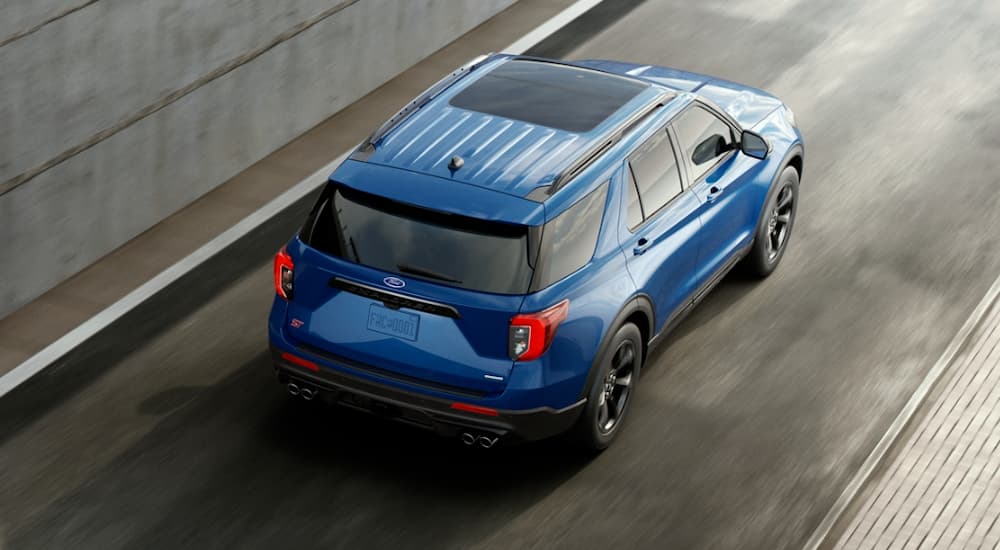
Overhead view of a blue 2020 Ford Explorer ST driving on a highway ramp.

Should Your Next Vehicle Be An SUV Or Sedan?

So you’re looking for a used vehicle - as your choices narrow, what type are you looking for? Do you need a commuter? A family vehicle? A vehicle that has storage and passenger space? How much of each will you need? The answers to these questions often depend on the individual, where they live, what they do, and what they want to do in their spare time. If you live in an urban area with limited or narrow parking, you won’t want a full-size SUV. If you live in a suburban area and are looking for an affordable vehicle, you may want to look at used SUVs for sale, especially when inclement weather arrives. How do you decide which vehicle will be the best fit for the next several years? People can sometimes struggle with this decision. Do you want a sedan? Do you want an SUV? Which one will last longer? Sedans used to be incredibly popular with families from the suburbs, but that has changed over time. Now, SUVs are what many suburban families drive due to space considerations, an SUV’s capabilities, and improved efficiency over the last two decades. If you’ve stalled out on a decision, perhaps it’s time to create a short pros and cons list to help you decide. The Pros And Cons Of A Sedan The sedan is a tried and true vehicle for a variety of drivers and locations. Driving around town can be easier in a smaller vehicle, not to mention a much easier time finding a parking spot to maneuver into. They are narrower than SUVs, making them perfect for navigating older towns and cities. Sedans provide space for up to five people; some even have a surprising amount of cargo space. They’re mostly efficient, and many automotive brands offer hybrid sedans for those looking for a way to cut down their carbon footprint as well as their time spent at gas stations. However, the issues people have with sedans boil down to lack of space, particularly in the back row (three kids can sit in the back with little issue but forget trying to cram five adults into a sedan). If you’ve got a growing family, eventually, you’ll need to upgrade to something a bit bigger with more elbow room. If you’re used to delivering packages, flying for work, or shopping for the holidays, you might find there just isn’t enough cargo room in the trunk. Suffice it to say that sometimes, not even a hybrid can entice a driver to purchase a sedan. The Pros And Cons Of An SUV SUVs come in a range of sizes, which means you can choose between a compact or subcompact crossover, a midsize crossover, or a full-size crossover, depending on your needs. There are also hybrid SUVs available, as well as used SUVs that are still quite efficient, even when fueled by gasoline. You’ve got extra space to stretch out, there tend to be additional safety features overall, and you’ll be able to fold the second and third rows flat for maximum cargo space. These are just a few of the reasons that drivers have gravitated toward SUVs since their arrival in the 1990s. On the other hand, some people prefer a smaller vehicle, especially if they’re just looking for a regular commuter vehicle. They may not need the extra storage space or additional seating, and they don’t mind being low to the ground. With an SUV, you might encounter less efficiency on some of the older models, and you may have difficulties finding a wide parking space occasionally. But are those truly reasons to forego an SUV? All things considered, if you haven’t made the leap yet, perhaps it’s time to find a used SUV to test out. After all, it might surprise you with all the benefits! Popular SUV Models And Sizes There are many automotive brands known for the quality of their SUVs: Jeep, Ford, Chevy, GMC, Nissan, Toyota, Hyundai, Subaru, Kia, Mazda, and others have all introduced SUVs into the market at one time or another. SUVs remain a popular staple for American drivers because of their versatility, safety ratings, and spacious interiors. While some might prefer one brand over the other, it’s a good idea to test out a few different brands to see which appeals to you the most. If you’re looking for a full-size SUV, take a look at the Ford Expedition, the Kia Sorento, or the Chevy Tahoe. These large SUVs can seat up to eight people and have plenty of cargo room for all the necessities of life. Looking for something midsize? Take a look at the Toyota Highlander, the Nissan Pathfinder, or the Honda Pilot. While they typically have less cargo space, passenger space is not compromised by the reduction from full-size to midsize. Many suburban families prefer midsize SUVs due to their size, efficiency, and flexibility. If you want something similar in size to a sedan, you can take a peek at compact or subcompact SUVs like the Subaru Crosstrek, the Toyota RAV4, or the Chevy Trax. These small SUVs still provide plenty of room but improve in efficiency ratings over their larger siblings. Additional Benefits Of Driving An SUV Since SUVs are so popular, brands are very competitive when it comes to offering additional features as well as new innovations. Many newer SUVs, even used ones, come with a backup camera, multiple USB ports, and sometimes even Wi-Fi capability or a wireless charging pad. SUVs also typically have traction control, which can help prevent the SUV from turning over in the case of an accident. They can even be more efficient than a sedan, particularly if you’re looking at a smaller SUV or one with a hybrid option. Wouldn’t you love the capability of an SUV, particularly when it’s paired with high efficiency and modern tech? Some young drivers are more comfortable inside SUVs because they aren’t as low to the ground, while older drivers find it easier to enter and exit SUVs rather than having to crouch down to enter a sedan. SUVs can be utilized in many different ways, from hauling musical instruments to bringing baby goats back to the farm, to car camping and more. If you want a vehicle that will be with you through it all, don’t look for a sedan to be able to do that job. Leave that to an SUV. Consider Buying A Used SUV Today Jotting down the pros and cons of types of vehicles can help you see the big picture. While a sedan might be a nice commuter, it won’t be able to give you the space you need if you want to do almost anything else. Sedans aren’t as highly sought after today simply because they are rather narrow in their abilities. People love SUVs because they aren’t just good for one thing - they’re great for outdoor types, indoor types, families, solo drivers, new drivers, and seasoned drivers, too. SUVs are more flexible and can last quite a long time if taken care of properly, so you may end up having more time with an SUV than you would with a sedan. If you’ve been debating getting a sedan versus an SUV, take a look around. Who is driving an SUV? Who is driving a sedan? What can they do in each vehicle? Do you really want to be limited in where you can go and what you can do? If you’d rather have a vehicle that can play multiple roles in your life, it’s time to consider buying an SUV. There are plenty of high-quality used SUVs for sale, so take a look and see which brands you like most, and then take a few for a test drive here at DriveHubler Certified Pre-Owned. Just be warned - once you drive one, it’s unlikely you’ll ever want to drive anything else.
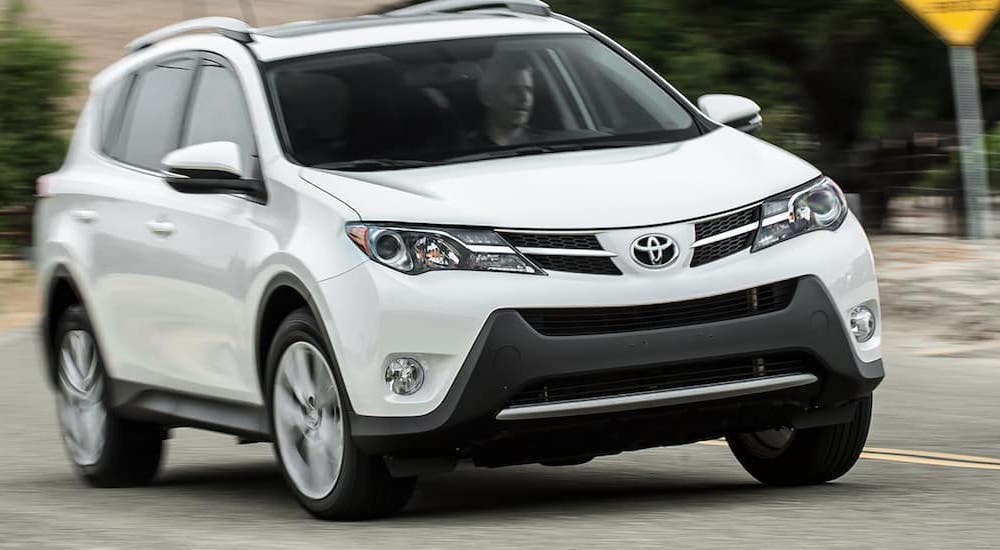
A white 2015 Toyota RAV4 driving on a winding road.

What’s The Difference Between SUVs And Crossovers?

Over the past several years, interest in vehicles that function to fit the busy lifestyle of families has increased. This increased interest has pushed SUVs and crossovers past sedans in popularity. In fact, in 2021, SUVs accounted for more than 52% of the automobiles purchased in the United States. The popularity has also resulted in a variety of options from all the main manufacturers, giving you the opportunity to find one that fits your needs best. At DriveHubler Certified Pre-Owned, we have a large inventory of used SUVs for sale for you to choose from. We also have a knowledgeable team available to review each option with you so you can make an informed choice. Our superstore in the heart of Indiana has helped countless drivers find a vehicle to fit their needs. We work hard to ensure a hassle-free and stress-free shopping experience that allows you to take the time you need, ask any questions you have, and secure financing even if you have less-than-perfect credit. With over 1,000 pre-owned vehicles in stock, we’re the team you need. Let's take a closer look at SUVs and crossovers, including some great options for you to choose from. SUVs and Crossovers: Breaking Down the History While SUVs and crossovers might seem like a newer idea, the first SUV debuted for the public in 1935, thanks to a demand for vehicles with off-road capability and versatility. This was after they’d been used in the military and industrial sectors first. The 1935 Chevrolet Suburban, intended to be a multipurpose vehicle capable of transporting both passengers and cargo, was built on a truck-based chassis. A few years later, in the 1960s, increased interest in off-road vehicles, such as the Ford Bronco, opened up new markets for even more consumers. However, it wasn’t until the 1980s that the SUV industry truly took off. Drivers flocked to this type of vehicle thanks to their roomy interiors, elevated driving positions, and adventurous appeal. It was around this time that the name "SUV" became widely used to describe this category of vehicles. Along with the resurgence of interest, car manufacturers began focusing on increasing innovations and design to make the SUV a good fit for multiple types of drivers. The crossover, which merged the functions of classic SUVs and passenger cars, was a major development in the automobile industry throughout the 1990s. Crossovers offer the versatility of SUVs along with the handling and comfort of sedans, combining the best of both worlds. Unlike SUVs, which have a body-on-frame construction, these vehicles are unibody, which makes them lighter, more fuel-efficient, and more appropriate for driving in multiple situations, including commuting into Indianapolis and navigating narrow roads. For instance, vehicles like the Toyota RAV4 and the Honda CR-V in the mid-1990s appealed to younger drivers along with families. The SUV market has developed exponentially over the last 20 years, taking the lead in the automobile industry. These cars serve a broad spectrum of customers and range in size from compact to full-sized. Improved fuel economy, a more comfortable ride, and handling similar to that of a vehicle are some reasons for their success. The history of SUVs and crossovers demonstrates how flexible the car industry can be in response to shifting consumer demands and tastes. SUVs and crossovers have gone from being utilitarian vehicles to the opulent, cutting-edge vehicles of today. We’re certain there's an SUV or crossover to suit your demands in our inventory, giving you the comfort, safety, technology, and connectivity that you need. What Is an SUV? A few differences were mentioned briefly above, but the information below adds more detail. Even though these two might look alike at first, they differ greatly from one another. The term SUV, or sport utility vehicle, has been used for many years and is characterized by a sturdy body-on-frame design akin to a truck. This indicates that, like a conventional truck, the vehicle's body is constructed on a separate frame. SUVs with this design have the toughness and longevity required for off-road excursions. The following characteristics of SUVs are common: Off-Road Capability Conventional SUVs are built with strong suspensions, four-wheel drive, and high ground clearance because they are often intended for off-road usage. This makes them a good choice for managing various terrain and road conditions. Whether you’re taking advantage of the trails at Badlands Off Road Park or navigating snowy winter roads around Greenwood, SUVs offer the stability you need. Towing Capability SUVs have a reputation for being able to tow large loads, which makes them perfect for transporting boats, trailers, and other large items. Their body-on-frame design and potent engines make this feasible. Size Compared to crossovers, SUVs are often longer and wider. They are ideal for larger families or individuals who need extra interior space because they frequently feature three rows of seating. What Is a Crossover? Conversely, crossovers are a relatively new addition to the automobile landscape. Their comfort and versatility have boosted their popularity over the past few decades. Among the essential traits of crossovers are: Unibody Construction Like most automobiles, crossovers are constructed with a unibody structure, in contrast to SUVs. As a result, the crossover is lighter and often uses less fuel. Crossovers are not as robust but may be more comfortable for daily use because they do not have a separate frame. Performance on the Road The main purpose of crossovers is to perform well on the road. They are a well-liked option for family vacations and everyday commuting since they offer a more comfortable and car-like experience. Options for Compact and Midrange Crossovers come in various sizes, allowing you to select the one that most closely matches your needs for seats and space. The compact size also makes parking in tight spaces easier, whether commuting into the city or staying around the Greenwood area. Availability of All-Wheel Drive Although not all crossovers come with all-wheel drive, many do, which qualifies them for light off-road capability. The construction, function, and capacities of an SUV and a crossover determine their differences. While crossovers provide a smooth and functional ride for urban and suburban settings, SUVs are the preferred vehicle for individuals looking for off-road adventures, heavy towing, and cabin size. Your lifestyle, driving requirements, and personal preferences will all influence your decision between the two. Recognizing these variations will enable you to choose your next car wisely, whether you're driving a crossover through the city or an SUV across challenging terrain. SUV and Crossover Options When shopping on our lot, our team can help you assess which SUV or crossover is best. We can review brands and trim levels to help you understand your options. It’s interesting to note that some of the first options are still prominent selections today, as the Chevy Suburban, Honda CR-V, Toyota RAV-4, and Jeep Cherokee all make excellent choices for today’s drivers. Additionally, the Subaru Forester, Chevy Equinox, Ford Escape, and Kia Sportage are solid choices to consider. Whether It’s an SUV or Crossover, We’re Here to Help You Find a Great Vehicle Our team has a wide selection of SUVs and crossovers for you to choose from. You can shop in-store or online. Both options give you upfront pricing and great financing choices, regardless of your credit history. Not only that, but we take the time to ensure you get the vehicle you need by asking questions and walking you through the brands available, as well as model and trim levels. We also offer Q-Certified vehicles that let you know they’ve been inspected by an independent III Inspector and reconditioned by our service team. These vehicles also come with a 30-day/1,000-mile comprehensive warranty and a two-year/100,000-mile limited powertrain warranty. If you’re in the market for a used SUV or crossover, stop by and talk to our team.

Contact Us

Fill out this form below and we'll contact you shortly
*Required Fields